
White Paper
Design of Targeting Lentiviral Vectors and Their Producer Cells for in vivo CAR-T

WHITE PAPER
Design of Targeting Lentiviral
Vectors and Their Producer
Cells for in vivo CAR-T
ProBioCDMO.com

Introduction: The Evolution from ex vivo to in vivo CAR-T Therapy
Chimeric antigen receptor (CAR) T cell therapy is a revolutionary treatment for some hematological malignancies.
CD19-targeting CAR-T cell therapies have an overall response rate up to 54% in lymphomas, which is higher (71–81%) in
B cell acute lymphoblastic leukemia [1]. However, conventional CAR-T therapy, namely ex vivo CAR-T, requires complex
ex vivo engineering and expansion of the patient’s autologous T cells. Only after these processes can the genetically
manipulated and activated CAR-T cells be infused back with the patient’s circulation system to tackle with malignant
blood cells. To reduce the manufacturing complexities and shorten the wait time of the patient, researchers and medical
practitioners have turned to the “fast CAR-T concept”, which removes the several week-long expansion stage of CAR-T
cell manufacturing [2]. However, to reduce time to treatment and circumvent the complexity of ex vivo CAR-T
manufacturing, the straightforward solution appears to be manufacturing the CAR-T cells in vivo for patients, namely in
vivo CAR-T therapy.
Manufacturing CAR-T cells directly and immediately in a patient’s body involves using a vector (normally viral or
LNP-based) to deliver a CAR-encoding gene or mRNA into the patient. Within the patient’s circulation system, this vector
will find its way into the patient’s T cells and express the CAR molecule on T cell surfaces. In doing so, in vivo CAR-T
therapy eliminates the lymphodepletion step, which is an essential patient pretreatment step for ex vivo CAR-T therapy in
order to create space for receiving CAR-T cells.
1
Design of Targeting Lentiviral Vectors and Their Producer Cells for in vivo CAR-T
The Envelope Systems for Targeting Lentiviral Vectors (tLVVs) as
The CAR Gene-Delivering Vehicles For in vivo CAR-T Therapy
VSV-G (The Envelope Glycoprotein of Vesicular Stomatitis Virus, Indiana Strain)
To achieve long-term CAR expression in T cells and profound therapeutic effectiveness, retroviruses—particularly
lentiviruses—serve as the dominant delivering vehicles for CAR genes, due to their ability to integrate into the host
genome. As a type of enveloped virus, lentiviruses (and their derivative, lentiviral vectors (LVVs), contain glycoproteins
on their envelope that mediate both the recognition of host cell receptors, membrane fusion, and infection of host cells.
Therefore, the envelope glycoprotein on LVV surface determines the types of cells the LVV can infect. The most
commonly used envelope glycoprotein for LVVs is the envelope glycoprotein from Indiana strain of vesicular stomatitis
virus (hereafter termed VSV-G). Because VSV-G recognizes low-density lipoprotein (LDL-R), which is present on a
broad range of cell types, VSV-G pseudo-typed LVVs can infect a wide variety of host cells. More importantly, VSV-G
pseudo-typed LVVs generally yield very high titers.
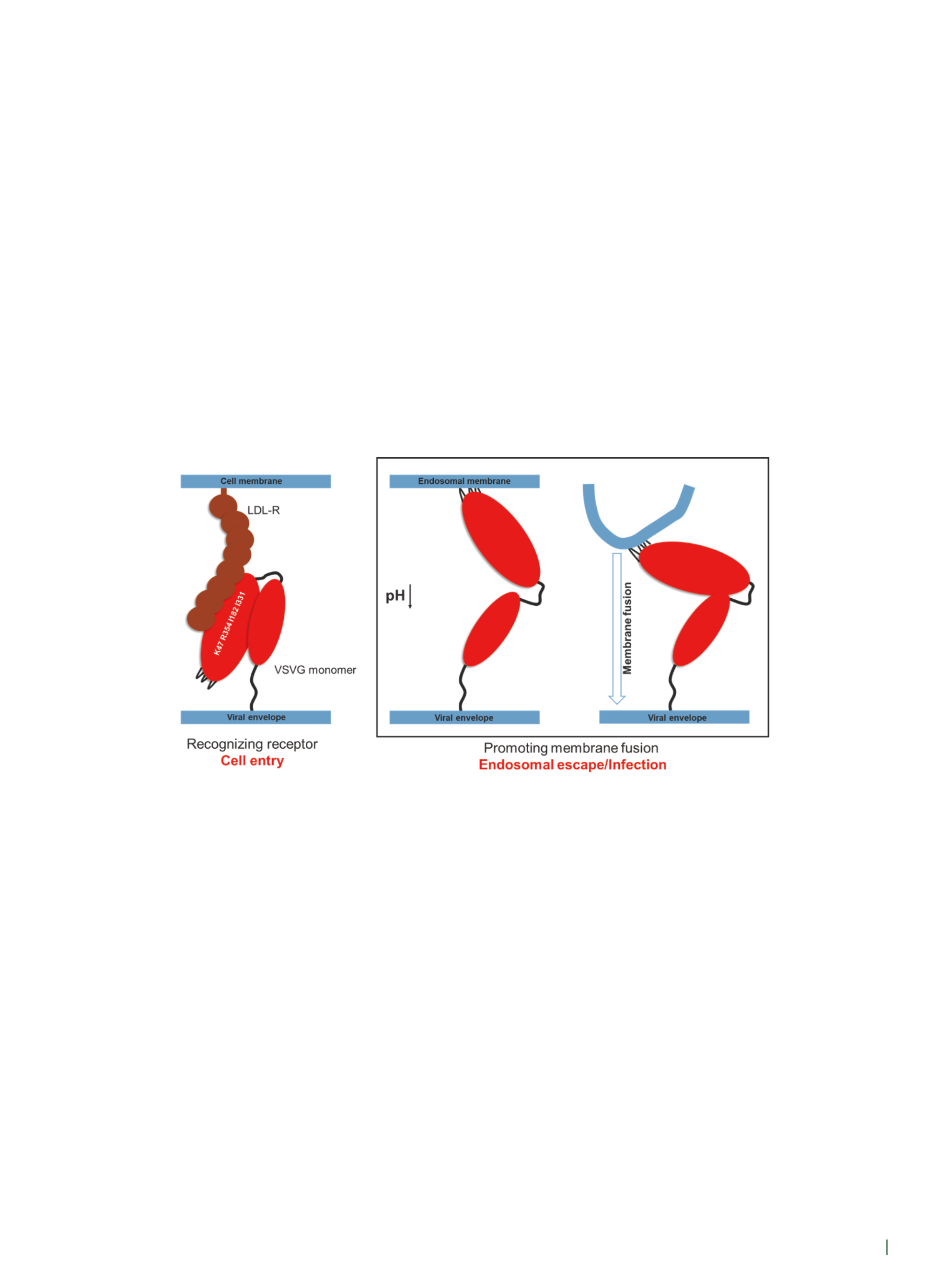
Figure 1. VSV-G mediates viral entry of host cells and promotes the fusion between LVV
envelope and host cell endosomal membrane.
VSV-G mediates LVVs infecting their host cells in two sequential steps [3]:
1. VSV-G binds to LDL-R on host cells, immobilizing the viral particles on the cell surface. The binding ultimately leads to
the endocytosis of the LVVs by the host cell. After endocytosis, the LVV temporarily resides within the endosome formed
during endocytosis (Figure 1, left and Figure 2).
2. When the pH within the endosome drops due to various factors, the VSV-G on the LVV envelope undergoes a confor-
mational change: it unfolds and inserts part of itself into the endosomal membrane. The subsequent refolding of the
VSV-G protein will drag that part of endosomal membrane into close proximity with the LVV envelope, triggering the
fusion of LVV envelope with the endosomal membrane (Figure 1, right). As a result, the LVV capsid containing the viral
genomes will be finally released into the host cell cytoplasm (Figure 2).
ProBioCDMO.com
2
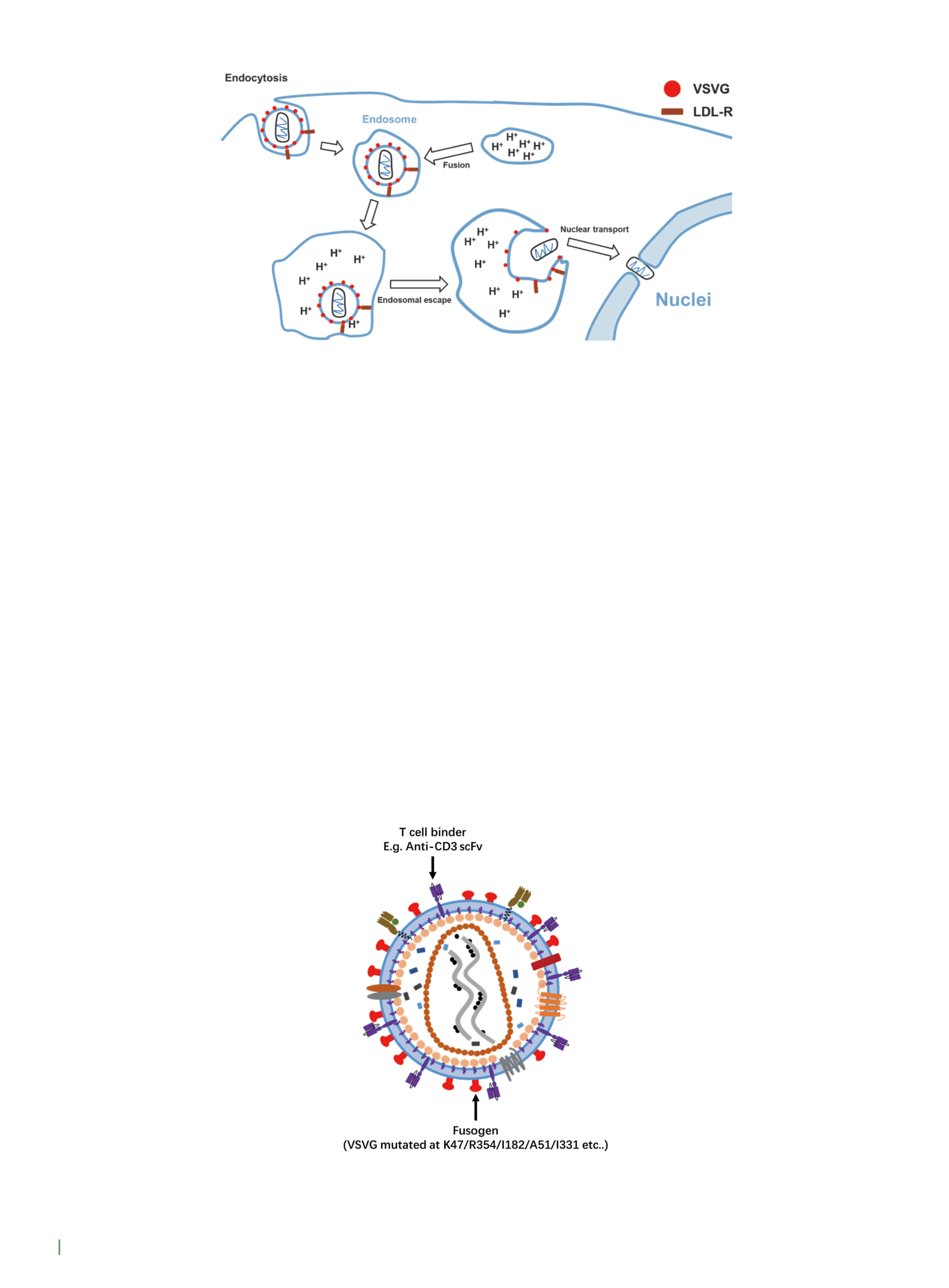
Figure 2. Infection process of VSV-G pseudo-typed LVVs.
Engineering VSV-G pseudo-typed LVVs from infecting all LDL-R expressing cell types
to infecting T cells exclusively
The efficacy of several CAR molecules has been confirmed during the clinical practice of the ex vivo CAR-T therapy.
However, the transition to in vivo therapy leads to the delivery the CAR-encoding gene or mRNA into a patient’s T cells
exclusively, rather than other cell types of the patient— a new pivotal hurdle to overcome.
Due to the significant titer advantage of VSV-G pseudo-typed LVVs, researchers began with VSV-G pseudo-typed LVVs
to develop T cell specifically targeting LVVs. In doing so, a pioneer French group first mutated the VSV-G protein to
prevent the recognition of its cognate receptor LDL-R, while preserving the membrane fusion capability of the VSV-G
protein [4]. The mutation sites are K47 and/or R354 (the ordinal numbers of amino acids shown here start after the
secretion peptide on the protein). By mutating these two amino acids on VSV-G, the VSV-G pseudo-typed LVVs is blind
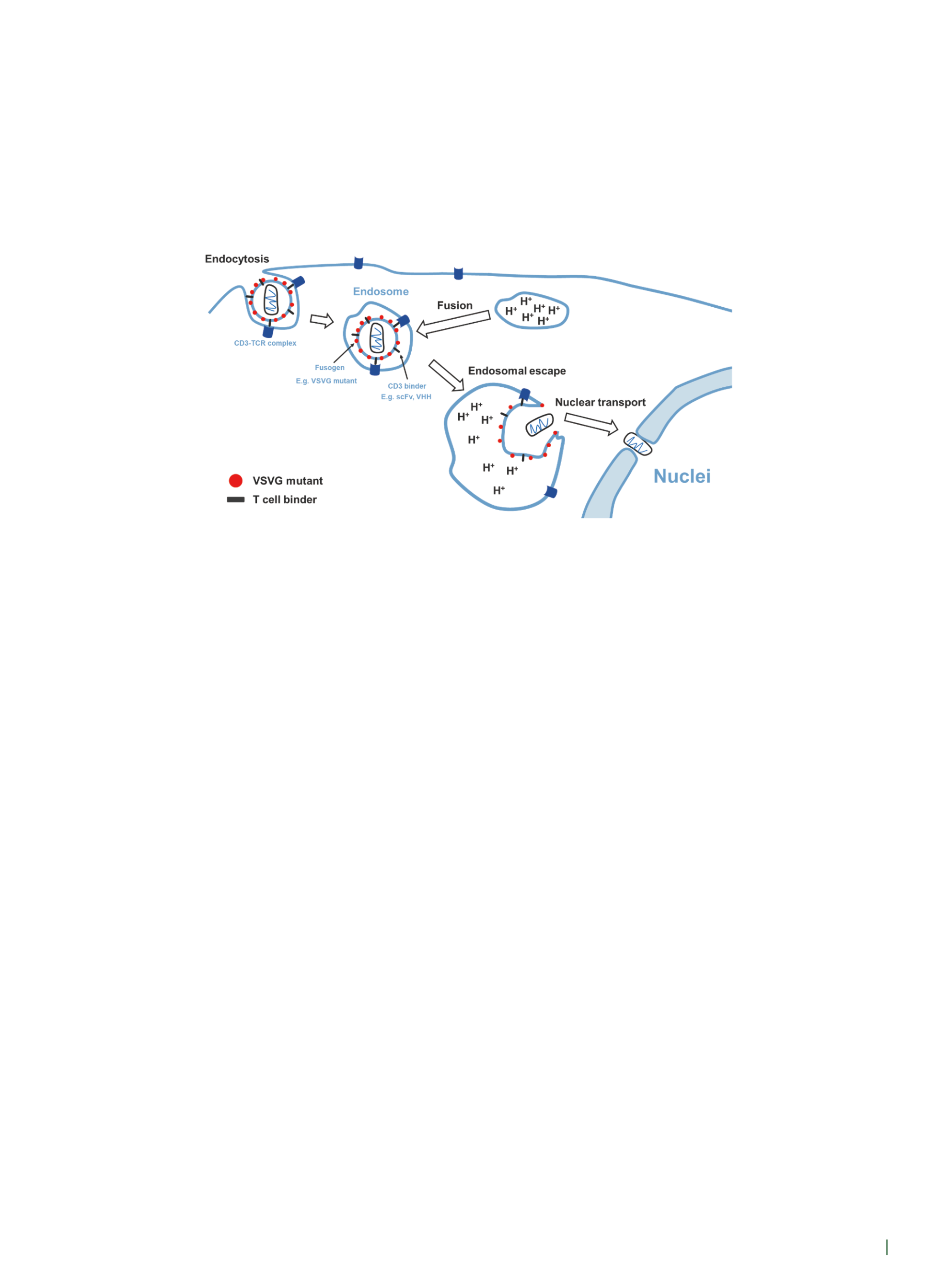
to LDL-R, and no longer infect any cell types efficiently. Additional expression of a T cell binder (E.g., anti-CD3/7/8 scFvs,
VHHs) on the envelope of the VSV-G mutant pseudo-typed LVVs then generates LVVs that only recognize and infect T
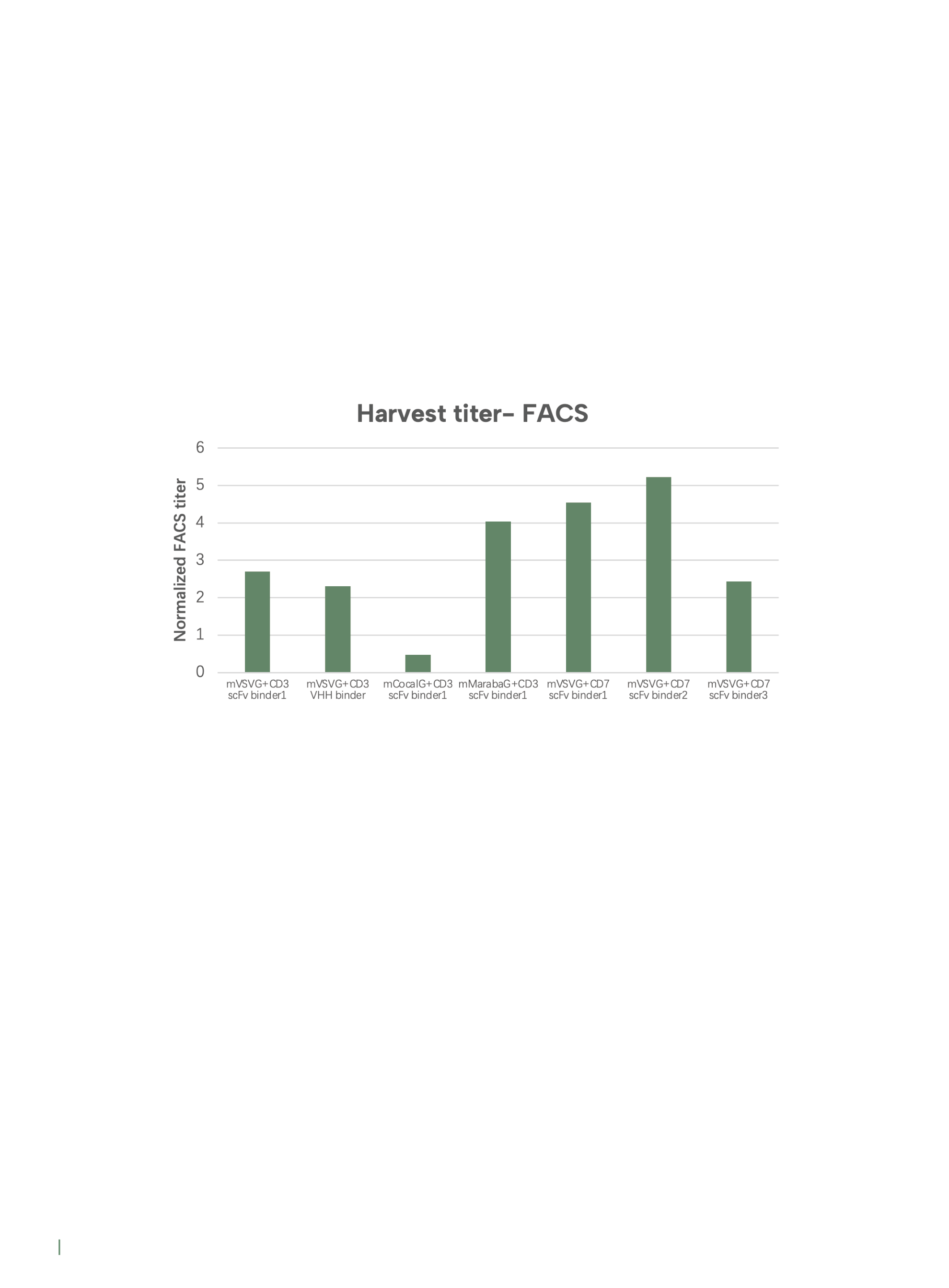
cells (Figure 3). In this case, the T cell binders on the LVV envelope mediate recognition of T cells. After the LVVs are
endocytosed by the T cells, the VSV-G mutant on the LVV envelope still mediates fusion of LVV envelope with the
endosomal membrane (Figure 4).
Figure 3. Schematic of an in vivo CAR-T tLVV derived from VSV-G pseudo-typed LVVs.
3 Design of Targeting Lentiviral Vectors and Their Producer Cells for in vivo CAR-T
Shortly afterwards, the study from Interius BioTherapeutics, Inc. identified that the I182 to E mutation on VSV-G can
serve the same purpose as K47 and R354 mutations [5]. Another biotech company, EsoBiotec, discovered more
mutation sites on VSV-G protein, the mutating of which can also de-target (blind) VSV-G while preserving the
membrane fusion capability of VSV-G [6]. These mutation sites include A51, I331, etc. LVVs pseudo-typed by VSV-G
bearing one or several of the above mutations, together with a T cell binder present on the envelope are essentially the
“T cell specifically targeting LVVs” or “T cell re-targeting LVVs”, which are the most common modality of LVVs used in
current in vivo CAR-T therapies.
Figure 4. Infection process of in vivo CAR-T LVVs on a T cell (VSV-G mutant pseudo-typed
LVV which also presents T cell binders on the envelope for T cell targeting).
Options of glycoproteins apart from VSV-G mutants
As previously mentioned, the commonly used VSV-G protein in LVV manufacturing is the envelope glycoprotein of the
Indiana strain of Vesicular stomatitis virus. In bio-taxonomy, Vesicular stomatitis virus represents a genus, which contains
many strains (species) other than the Indiana strain itself: Vesicular stomatitis virus, Cocal strain and Vesicular stomatitis
virus, Maraba strain, of which the glycoprotein can also serve as in vivo CAR-T tLVV envelopes [7, 8]. Cocal virus
glycoprotein (Cocal-G) and Maraba virus glycoprotein (Maraba-G) show 70-80% sequence similarity with VSV-G.
Cocal-G and Maraba-G use the same motif as in VSV-G molecule to recognize LDL-R as well. Therefore, the mutations
of the amino acids on Cocal-G or Maraba-G corresponding to K47/R354/I182/A51/I331 on VSV-G, can also lead to the
bindless of Cocal-G and Maraba-G to LDL-R. Like de-targeted VSV-G, the de-targeted Cocal-G and Maraba-G can also
be used to pseudo-type LVVs together with T cell binders to generate T cell specifically targeting LVVs [7].
Are there options outside the glycoproteins of the Vesicular stomatitis virus genus? The answer is a clear YES. In fact,
the glycoproteins from Paramyxoviridae (E.g., Nipah virus and Measles virus) have also been studied and used for
pseudo-typing LVVs. Unlike Vesicular stomatitis viruses, of which a single envelope glycoprotein fulfills two jobs:
Receptor recognition and membrane fusion, Paramyxoviruses (E.g., Nipah virus and Measles virus) use one glycoprotein
for receptor recognition and a second glycoprotein to perform membrane fusion. Researchers have attempted to mutate
and blind the receptor-recognizing glycoprotein of Nipah or Measles virus, and express an additional cell-specific
binder. By doing so, the envelope system of Nipah virus and Measles virus can also be used to pseudo-type LVVs and
generate cell specifically targeting LVVs. In fact, the Measles virus is the first virus type of which the envelope was
engineered to target specific cell types [9], and this pioneer attempt took place more than two decades ago, long before
the in vivo CAR-T therapy came along. Interestingly, in 2018, the first proof-of-concept for in vivo CAR-T therapy was
performed using Nipah virus glycoprotein pseudo-typed LVVs instead of the more commonly used VSV-G
pseudo-typed LVVs [10]. In doing so, researchers blinded Nipah G-glycoprotein by point mutations, and re-targeted the
LVV to T cells by additional presenting CD8 binders on the envelope.
ProBioCDMO.com
4
Although VSV-G has an intrinsic drawback which is instability to human complement system [11], mutated VSV-G is still
the most common option compared to glycoproteins from all the other virus types. This is due to the high titer yield of
VSV-G pseudo-typed LVVs and possibly the fact that there are relatively more available research and clinical data
regarding VSV-G function and safety compared to other glycoproteins.
ProBio produces in vivo CAR-T tLVVs with high-quality assurance
ProBio’s comprehensive process development and manufacturing platform provides end-to-end solutions for upstream
manufacturing and downstream purification of in vivo CAR-T tLVVs. Through systematic optimization of binder designs
and fusogen combinations, the optimal titers have been identified (Figure 5).
Figure 5. T cell specific targeting LVVs produced by ProBio LVV-PD show high functional
titers on human T cell line.
The T cell-targeting LVVs are also able to infect T cells exclusively within human PBMCs, as exemplified here, the CD3
binders on the LVV envelope re-targeted the L VVs into CD3-positive T cells and achieved the expression of gene of
interest (GOI) only in these cells (Figure 6). This is confirmed by using both GFP (Figure 6A) or anti-CD19 CAR (Figure
6B) as a sole GOI in the LVV. Figure 6A also indicates that regardless of the varying CD3+ percentage among two differ-
ent donors, LVVs always deliver GOI into CD3-positive cells with high specificity. Moreover, when using the anti-CD19
CAR as a GOI, the LVVs can transform their host cells into CAR-T cells with robust target cell killing against Raji cancer
cells which is CD19 positive (Figure 6B).
5 Design of Targeting Lentiviral Vectors and Their Producer Cells for in vivo CAR-T
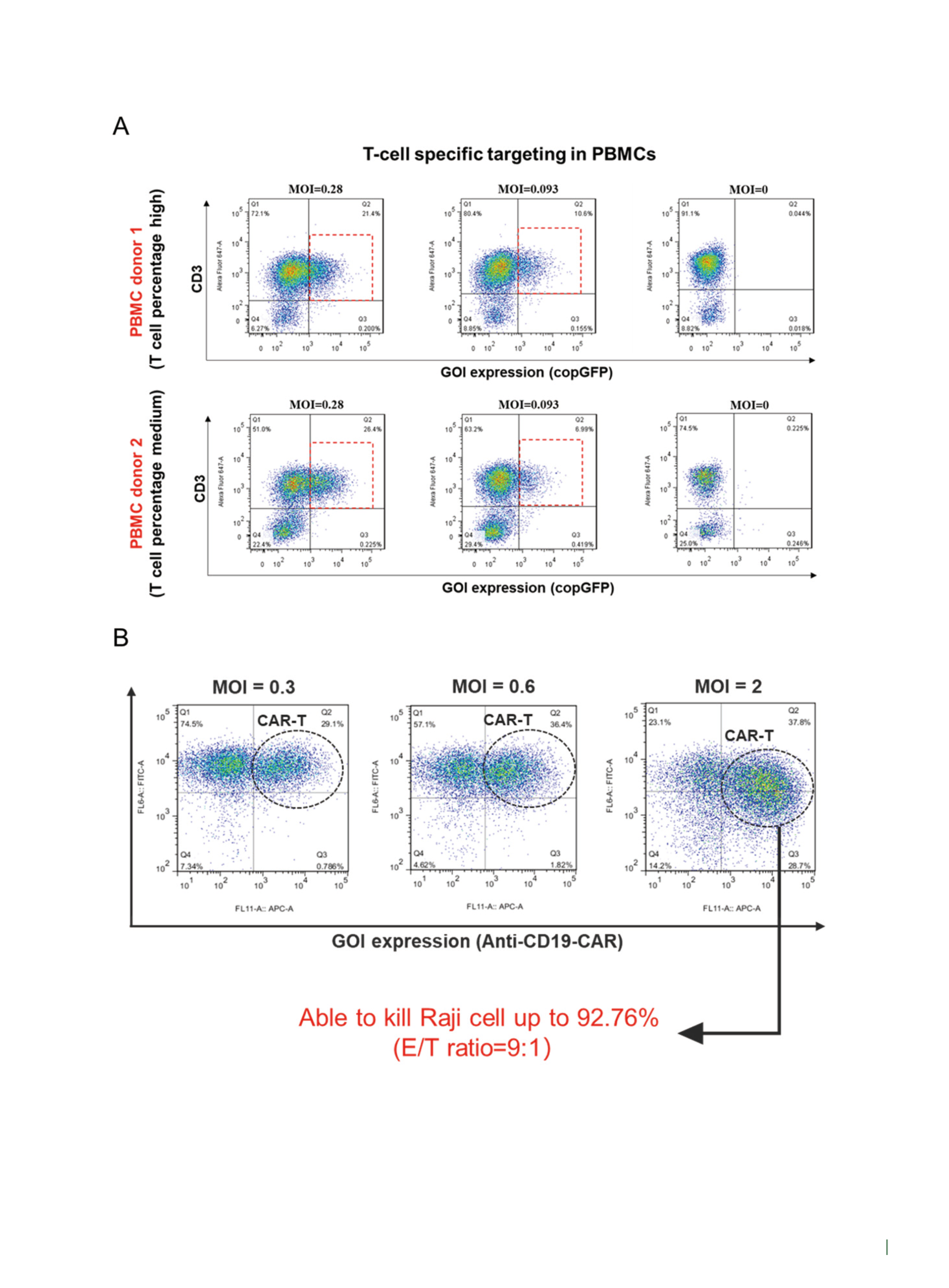
Figure 6. T cell specific targeting LVVs produced by ProBio LVV-PD show high specificity
for infecting human T cells
ProBioCDMO.com
6
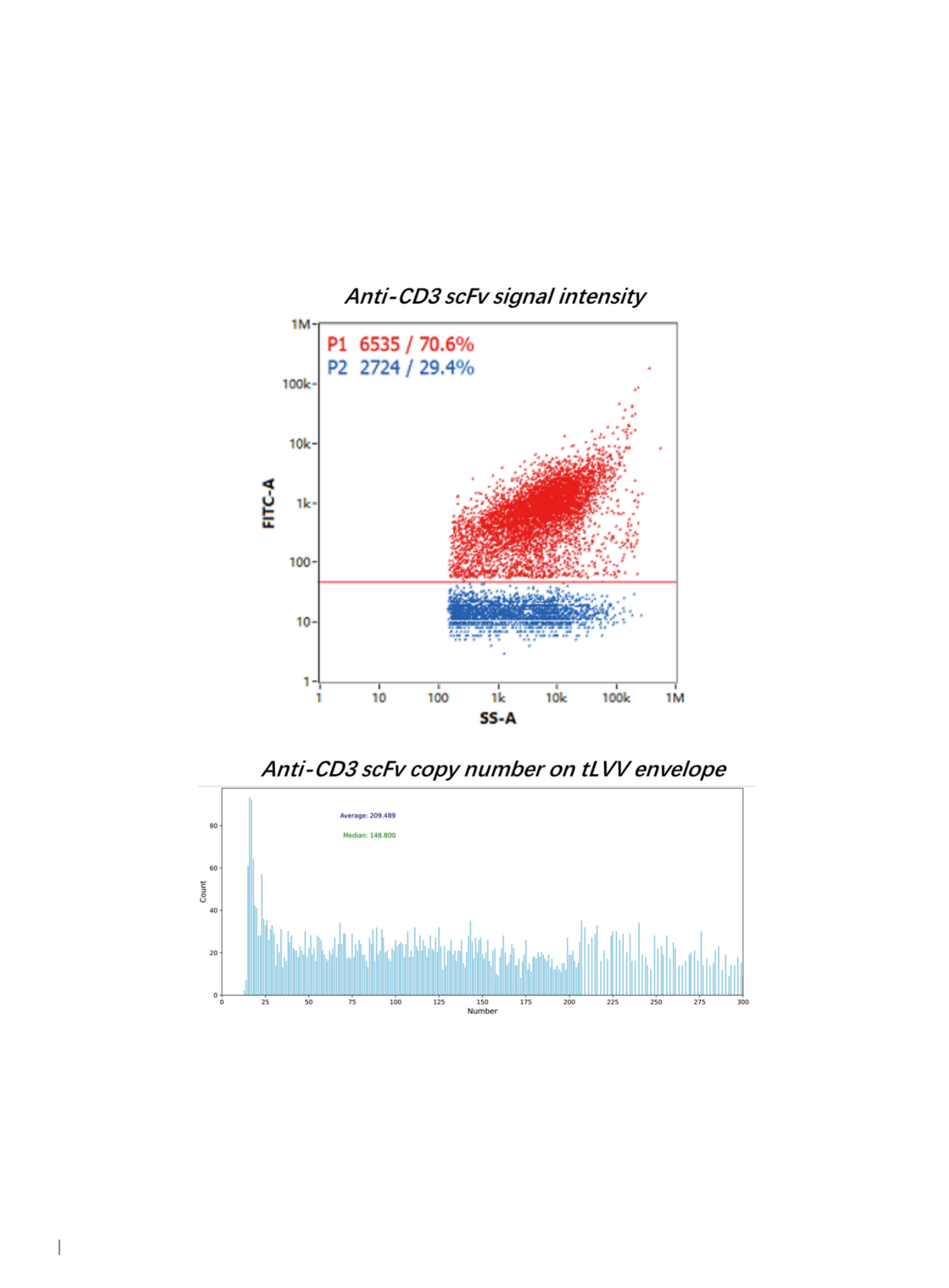
Apart from a comprehensive functional validation, Nanoflow provided direct evidence that the T cell specifically target-
ing LVVs (in vivo CAR-T tLVVs) produced by ProBio are highly enriched with T cell binders on the envelope (Figure 7,
exemplified here is the anti-CD3 scFv of CD3-targeting LVVs produced by ProBio LVV-PD). As shown in Figure 7, 70%
of the tLVV particles within the sample have been successfully armed with anti-CD3 scFvs. This indicates the high quali-
ty of the T cell specific LVVs..
Figure 6. Enrichment of CD3 binders on the CD3+ T cell-targeting LVVs produced by
ProBio LVV-PD
7
Design of Targeting Lentiviral Vectors and Their Producer Cells for in vivo CAR-T

The Transfer Plasmid Design for tLVVs For in vivo CAR-T Therapy
The transfer plasmid has a cassette of LVV genome full-length from 5’LTR to 3’LTR, which contains a GOI. For CAR-T
therapy, the GOI is essentially a CAR encoding gene. During the manufacturing of LVVs, the transfer plasmid will express
the LVV genome RNA in producer cells (293/293T cells). The Genome RNA will be packaged into the LVV capsid. The
capsid then buds from producer cell and takes with it a small patch of the cell membrane of the producer cell to form the
LVV envelope. Therefore, the membrane proteins on the producer cell membrane will be carried alongside onto the LVV
envelope.
The structure layout of the LVV genome for ex vivo CAR-T LVVs and in vivo CAR-T LVVs is essentially the same. Therefore,
a transfer plasmid used for ex vivo CAR-T LVV manufacturing can readily apply to in vivo CAR-T LVV immediately.
However, engineering can still take place in the following aspects to improve the compatibility of the LVVs for in vivo use.
First, for in vivo CAR-T tLVVs, a T cell specific promoter can be used to drive the CAR gene expression [6]. The constitutive
human EF1α promoter has been the major option for driving CAR gene expression for ex vivo CAR-T therapy. Human EF1
α promoter is considered biologically safe as it is human-sourced. Also, this promoter is strong in T cells and drives very
high expression of CAR proteins. However, it is reported that a T cell specific promoter can replace human EF1α promoter
in clinical trials. Using T cell specific promoter can add another layer of safety control when delivering LVVs directly into the
patient’s circulation. For instance, even if the LVVs infects non-T cells by off-target effects, the T cell-specific promoter in
front of CAR gene will still restrict the expression of CARs in these non-desirable cells.
Second, a cargo-silencing design may hold implications for the manufacturing of tLVVs. LVVs are expected to express GOI
proteins eventually in host cells. However, during tLVV manufacturing in producer cells (293/293T), the GOI is already
inevitably expressed as proteins. Therefore, it is highly possible that LVVs will carry the GOI protein product in the LVV
particles. If the LVV GOI is a CAR gene, e.g., an anti-CD19 CAR gene, during the LVV packaging in 293T cells, the anti-CD19
CAR can be expressed by the 293T cells, and become present on the 293T cell surface. Then during budding process, the
LVVs will carry the anti-CD19 CAR on their envelope. When transfusing these LVVs with a patient’s blood to treat B-cell
malignancies, the anti-CD19 CAR on the LVV envelope might misguide the LVVs directly to the B cells, to form the
detrimental so called “CAR-B cells” [12, 13]. Repressing GOI expression during LVV manufacturing is important for in vivo
CAR-T LVVs and this will ensure a cleaner surface of the LVV envelope. In vivo CAR-T LVVs are designed to exclusively
target patient’s T cells by T cell binders on their envelope, and this is much more likely to take place when T cell binders
are the only targeting molecules on the LVV envelopes.
The Producer Cells of tLVVs For in vivo CAR-T Therapy
For directly delivering tLVVs into patients, it is critical to lower the immunogenicity of tLVVs and protect the tLVVs from
patients’ macrophage clearance. The MHC-I complex from producer cells, such as 293T cells, is clearly considered
exogenous for the patients. Carrying these 293T MHC-I proteins into patients might cause immune reactions that are
detrimental for the patients and compromise the therapeutic effects. Therefore, removing the MHC-I complex from
293/293T cell surface by knocking out the B2M gene of 293/293T cells will eventually eliminate the probability that a tLVV
envelope carries the MHC-I complex. Plus, human CD47 gene can be constantly and overly expressed in the producer
cells [6, 14]. This way the tLVV envelope will carry significantly more human CD47 molecules. CD47 acts as a molecular
shield against patients’ macrophages by decreasing the phagocytosis of therapeutic tLVVs by patients’ macrophages.
Apart from B2M knockout and CD47 overexpressing, using 293 cells instead of 293T cells to produce in vivo CAR-T tLVVs
also has safety implications. 293 cells do not contain SV40 T antigen and thus will not pass this protein onto the tLVVs they
produce. However, compared to 293T cells, 293 cells show a disadvantage in terms of LVV titer yield. Therefore, LVV
high-productive clone screening of 293 cells is required.
ProBioCDMO.com
8

Conclusion
The transition from ex vivo to in vivo CAR-T therapy represents a paradigm shift that replaces complex, time-consuming
manufacturing with a streamlined approach delivering therapeutic vectors directly into patients. This shift rests on three
critical pillars: engineering the LVV envelope for T cell-specific tropism, optimizing the transfer plasmid to restrict CAR
expression to T cells and prevent off-target protein carryover, and upgrading producer cells to reduce immunogenicity
and shield vectors from macrophage clearance.
ProBio’s LVV process development and manufacturing platform delivers end-to-end capabilities across these challenging
aspects, as demonstrated by high functional titers, and robust target cell killing activity. With integrated expertise in
envelope pseudotyping, transfer plasmid engineering, and producer cell line modification, ProBio provides a
comprehensive solution for advancing in vivo CAR-T programs from concept to clinical application, supported by
downstream purification, comprehensive product characterization and formulation expertise to preserve vector activity
and to ensure product quality.
Reference
1. Bulliard, Y., Freeborn, R., Uyeda, M. J., Humes, D., Bjordahl, R., de Vries, D., & Roncarolo, M. G. (2024). From promise
to practice: CAR T and Treg cell therapies in autoimmunity and other immune-mediated diseases. Frontiers in
Immunology, 15, 1509956.
3. Milojević, L., Si, Z., Xia, X., Chen, L., He, Y., Tang, S., ... & Zhou, Z. H. (2024). Capturing intermediates and membrane
remodeling in class III viral fusion. Science Advances, 10(49), eadn8579.
4. Nikolic, J., Belot, L., Raux, H., Legrand, P., Gaudin, Y., & A. Albertini, A. (2018). Structural basis for the recognition
of LDL-receptor family members by VSV glycoprotein. Nature communications, 9(1), 1029.
5. Andorko, J. I., Russell, R. M., Schnepp, B. C., Grubaugh, D., Mullen, K. F., Wakabayashi, A., ... & Johnson, P. R. (2025).
Targeted in vivo delivery of genetic medicines utilizing an engineered lentiviral vector platform results in CAR T and
NK cell generation. Molecular Therapy, 33(10), 4937-4952.
6. Viral vector and producer cell. WIPO (PCT): WO2025003526A1
7. Viral glycoprotein variants and uses thereof. WIPO (PCT): WO2025231185A1
8. Michels, K. R., Sheih, A., Hernandez, S. A., Brandes, A. H., Parrilla, D., Irwin, B., ... & Green, S. (2023). Preclinical proof
of concept for VivoVec, a lentiviral-based platform for in vivo CAR T-cell engineering. Journal for immunotherapy of
cancer, 11(3), e006292.
9. Nakamura, T., Peng, K. W., Harvey, M., Greiner, S., Lorimer, I. A., James, C. D., & Russell, S. J. (2005). Rescue and
propagation of fully retargeted oncolytic measles viruses. Nature biotechnology, 23(2), 209-214.
10. Pfeiffer, A., Thalheimer, F. B., Hartmann, S., Frank, A. M., Bender, R. R., Danisch, S., ... & Buchholz, C. J. (2018). In
vivo generation of human CD19‐CAR T cells results in B‐cell depletion and signs of cytokine release syndrome.
EMBO molecular medicine, 10(11), EMMM201809158.
9 Design of Targeting Lentiviral Vectors and Their Producer Cells for in vivo CAR-T

ProBio Inc.
Building 9, 311 Pennington Rocky Hill Rd,
Pennington, NJ
ProBioCDMO.com
+1-732-885-9188 (US)

11. Hwang, B. Y., & Schaffer, D. V. (2013). Engineering a serum-resistant and thermostable vesicular stomatitis virus G
glycoprotein for pseudotyping retroviral and lentiviral vectors. Gene therapy, 20(8), 807-815.
12. Cordes, N., Kolbe, C., Lock, D., Holzer, T., Althoff, D., Schäfer, D., ... & Kaiser, A. D. (2021). Anti-CD19 CARs
displayed at the surface of lentiviral vector particles promote transduction of target-expressing cells. Molecular
Therapy Methods & Clinical Development, 21, 42-53.
13. Ruella, M., Xu, J., Barrett, D. M., Fraietta, J. A., Reich, T. J., Ambrose, D. E., ... & Melenhorst, J. J. (2018). Induction
of resistance to chimeric antigen receptor T cell therapy by transduction of a single leukemic B cell. Nature medicine,
24(10), 1499-1503.
14. Sosale, N. G., Ivanovska, I. I., Tsai, R. K., Swift, J., Hsu, J. W., Alvey, C. M., ... & Discher, D. E. (2016). “Marker of Self”
CD47 on lentiviral vectors decreases macrophage-mediated clearance and increases delivery to SIRPA-expressing
lung carcinoma tumors. Molecular Therapy Methods & Clinical Development, 3.
10 Design of Targeting Lentiviral Vectors and Their Producer Cells for in vivo CAR-T