
Handbook
Optimized Cell Line Development

WHITE PAPER
Optimized Cell Line
Development Strategies for
Bispecific Antibody
Manufacturing
ProBioCDMO.com
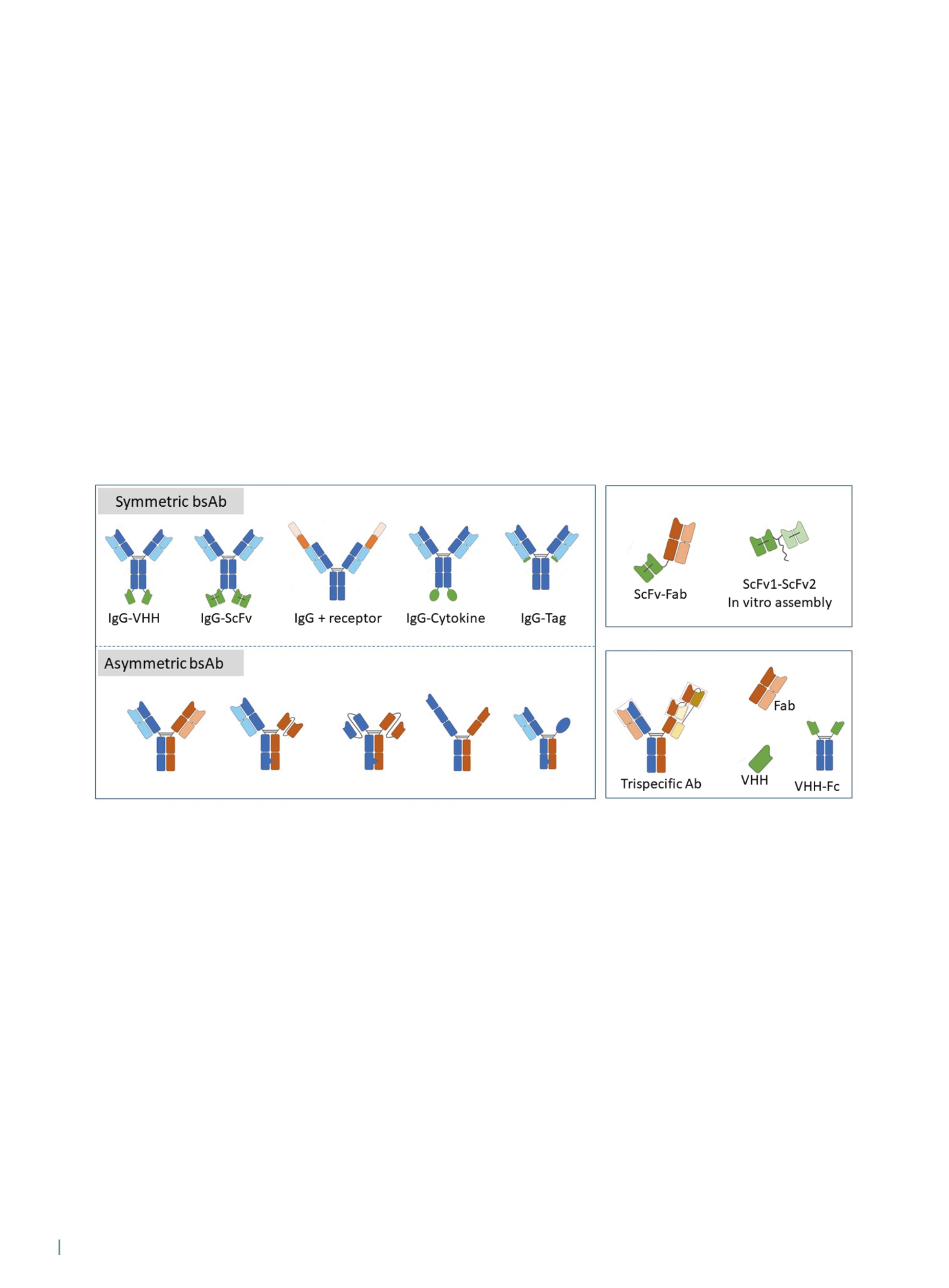
Bispecific antibodies (bsAbs) are rapidly emerging as a leading category of cancer therapy drugs that is gaining
increasing significance in clinical applications. Compared to monoclonal antibodies (mAbs), bsAbs have stronger
therapeutic potential. This is because bsAbs possess two distinct binding domains capable of simultaneously
targeting two different antigens or two different epitopes of the same antigen.
However, the production of bispecific antibodies can be challenging. Successful manufacturing of these dual-tar
geting molecules requires the correct assembly of multiple polypeptide chains. Random assembly of distinct heavy
and light chains leads to non-functional or monospecific impurities. Over the past two decades, various strategies
have been developed and implemented to address this issue.
Leveraging insights from the wealth of experience gained through approximately 100 chemistry, manufacturing, and controls
(CMC) projects, ProBio introduced the ProBox™ process development toolbox in 2023. ProBox is designed to facilitate
solutions for the production of intricate molecules such as bsAbs and recombinant proteins. ProBox™ systematically
classifies, condenses, and integrates approximately 200 technical challenges and corresponding solutions in both process
and analytical development based on their structural and quality attributes. With real-time updates, ProBox™ serves as a
valuable resource, assisting researchers in adeptly tackling evolving challenges in process development.
IgG like bsAb (Bearing an Fc)
Bispecific fragment
Others
Figure 1. ProBio's extensive experience in cell line development of various bispecific and trispecific antibodies
Two-vector system to promote heterodimer assembly in the
early stage of cell line development
Undesired impurities including homodimers, half-antibodies, single-chain byproducts, and aggregates are frequently
encountered in the manufacturing of bispecific antibodies which pose great challenges in down stream process
development.
At ProBio, we employ a two-vector or multi-vector system for the development of bispecific antibodies with complex
structures to enhance productivity and purity in CHO cells. The genes encoding the distinct polypeptide chains are
cloned into separate vectors and further co-electroporated into host cells at several different vector ratios
(chain-to-chain ratios) at the transfection stage, aiming to determine the optimal ratio that achieves a balanced
expression of different polypeptide chains. This optimization is crucial for the steps that follow, including stable pool
selection and single cell cloning.
1
Optimized Cell Line Development Strategies for Bispecific Antibody Manufacturing
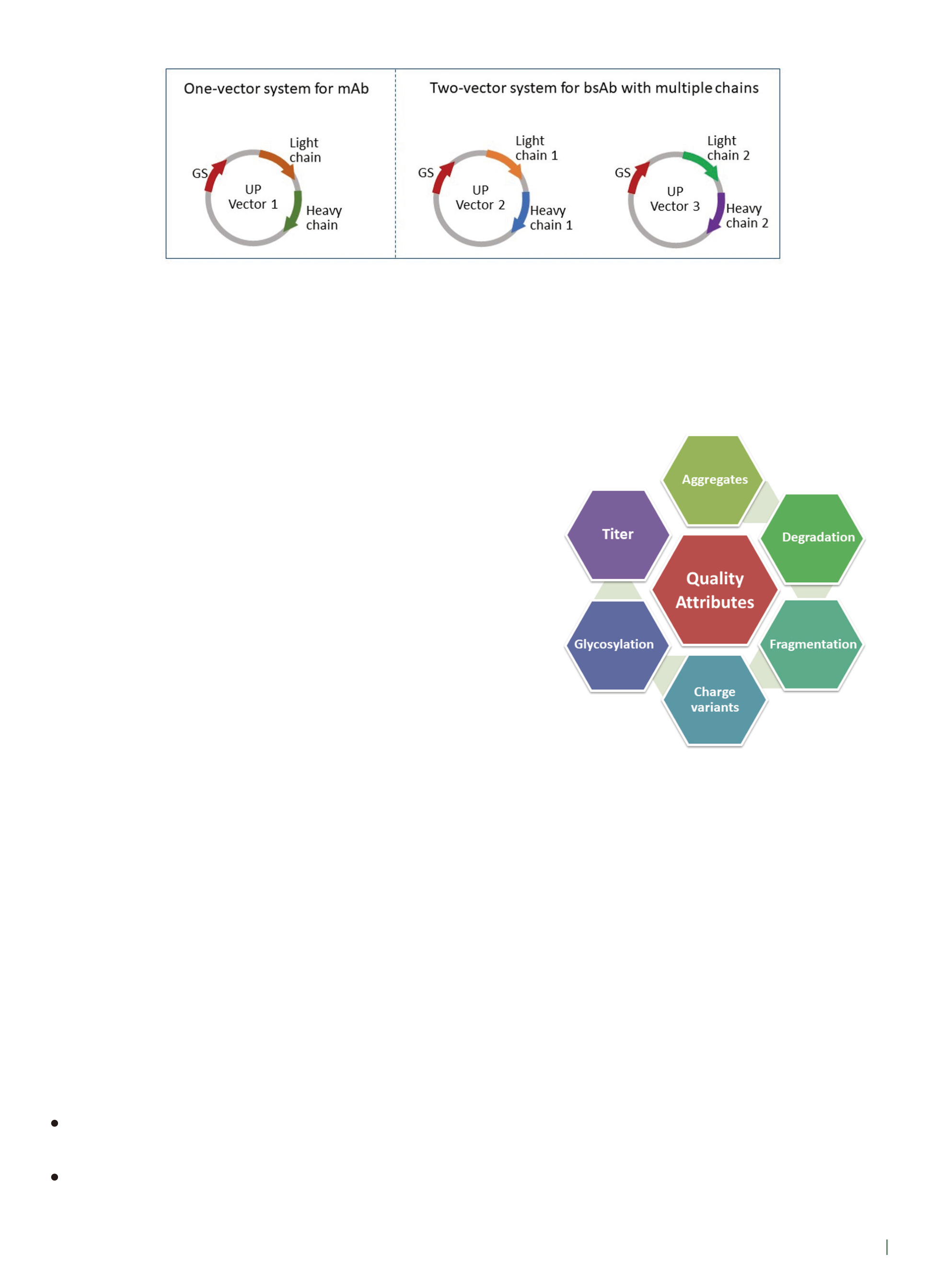
Figure 2. Schematic diagrams of the expression vectors for monoclonal antibodies and bispecific antibodies.
Cell pool materials used for process development to shorten the
overall timeline
Balancing the expression of polypeptide chains through
adjustment in the chain-to-chain ratio enables the identification
of cell pools with both high productivity and accurate antibody
assembly. The generated cell pools can be evaluated in fed-batch
cultures and the optimal cell pools will be used for single cell
cloning.
To expedite the CMC timeline, materials derived from the
generated cell pool are utilized for initiating the analytical methods
development and downstream process development processes, as
well as formulation development. Developability studies could also
be conducted in the early stages with cell pool materials to
evaluate the success and potential challenges associated with the
development of the biopharmaceutical candidate. By focusing
on critical attributes such as formulation, pharmacokinetics,
and chemical stability, developability studies contribute valuable
insights. These insights then guide the decision-making and
Figure 3. Fundamental considerations
optimization strategies throughout the CMC development
during cell line development
process.
Comprehensive characterization with multiple analytical methods to
support selection of clone candidates
Single-cell clones are isolated following the cell pool selection. Single-cell clones will be assessed in fed-batch
cultures to provide conclusive data on cell growth, product titer, and quality for selecting the top clone candidates.
During cell line development, GenScript ProBio employs a variety of analytical methods to identify mismatches in
bispecific antibody production.
For example,
SDS-PAGE and CE-SDS are both well-established techniques for molecular weight-based separation and purity
assessment of bsAbs.
SEC-HPLC separates proteins based on size and helps in identifying the presence of impurities such as aggregates
or size variations and confirming the correct assembly.
ProBioCDMO.com
2
icIEF can be used for protein separation based on its isoelectric point (pI) and characterization of charge variants.
Mass spectrometry (MS) is a powerful analytical technique widely used in the characterization of intact or subunit
mass of bispecific antibodies, confirming the correct format, and identifying any variations.
These analytical methods, when used individually or in combination, ensure a comprehensive characterization of
bispecific antibodies during production, guaranteeing their quality.
In ProBio’s platform, next-generation sequencing (NGS) is also employed to support the clone selection by providing
comprehensive and high-throughput analysis of genetic information. NGS ensures precise verification of the
genetic sequence in individual clones to check the expression cassettes. NGS facilitates the detection of mutations or
variations within the expression cassettes of individual clones, a critical step for identifying potential genetic aberrations
that could impact the performance or stability of a clone.
Case study 1. Significantly increased purity achieved by two-vector system for an asymmetric
bispecific antibody.
In this case study, ProBio worked on the development of an asymmetric antibody comprising two distinct polypeptide
chains. Both one-vector and two-vector systems were utilized in the production of this bsAb. The generated cell
pools were evaluated in fed-batch cultures and the fed-batch samples were further purified for quality analysis. As
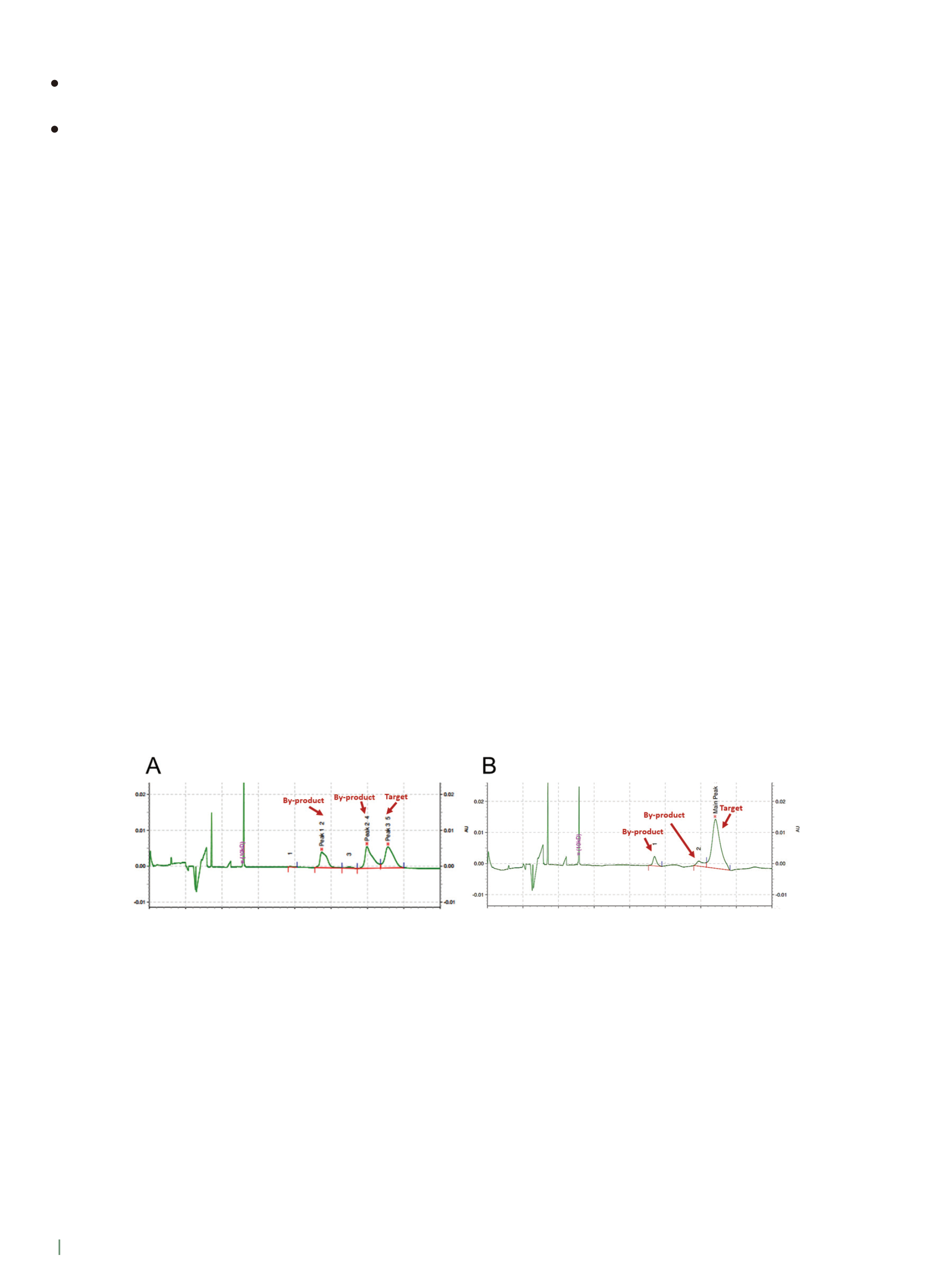
revealed by the Non-reduced CE-SDS (CE-SDS-NR) analysis, the main peak could not be defined in the CE-SDS-NR
profile when using one-vector, mainly because of the presence of single-chain and homodimer by-products resulting
from overexpression of one chain (Figure 4A). In contrast, the two-vector system significantly enhances accurate
assembly by ensuring a balanced expression of the two distinct chains (Figure 4B). The titer of the target product
from the two-vector system reached 5.6 g/L, representing a significant increase over one-vector clones. NGS was
utilized to verify the nucleic acid sequence of the expression cassette, including the sequence of the coding region.
To assess the clone stability, the cells were repeatedly passaged for over 60 generations and evaluated in fed-batch
cultures. After 60 cell doublings, the clone retained 87.1% titer compared to the PCB (primary cell bank) cells,
indicating excellent clone stability that can fully support large-scale production.
Figure 4. CE-SDS-NR analysis of cell pool fed-batch samples following one-step affinity purification.
A) The main peak cannot be defined by CE-SDS-NR analysis when utilizing a one-vector system.
B) The CE-SDS-NR analysis revealed a distinct main peak, indicating the significantly improved purity achieved by
modulating the expression of distinctive polypeptide chains using a two-vector system.
Case study 2. Delivery of a symmetric bsAb by a robust and scalable process
In this case study, ProBio developed the cell line expressing a bsAb with a symmetric IgG-appended format. Single cell
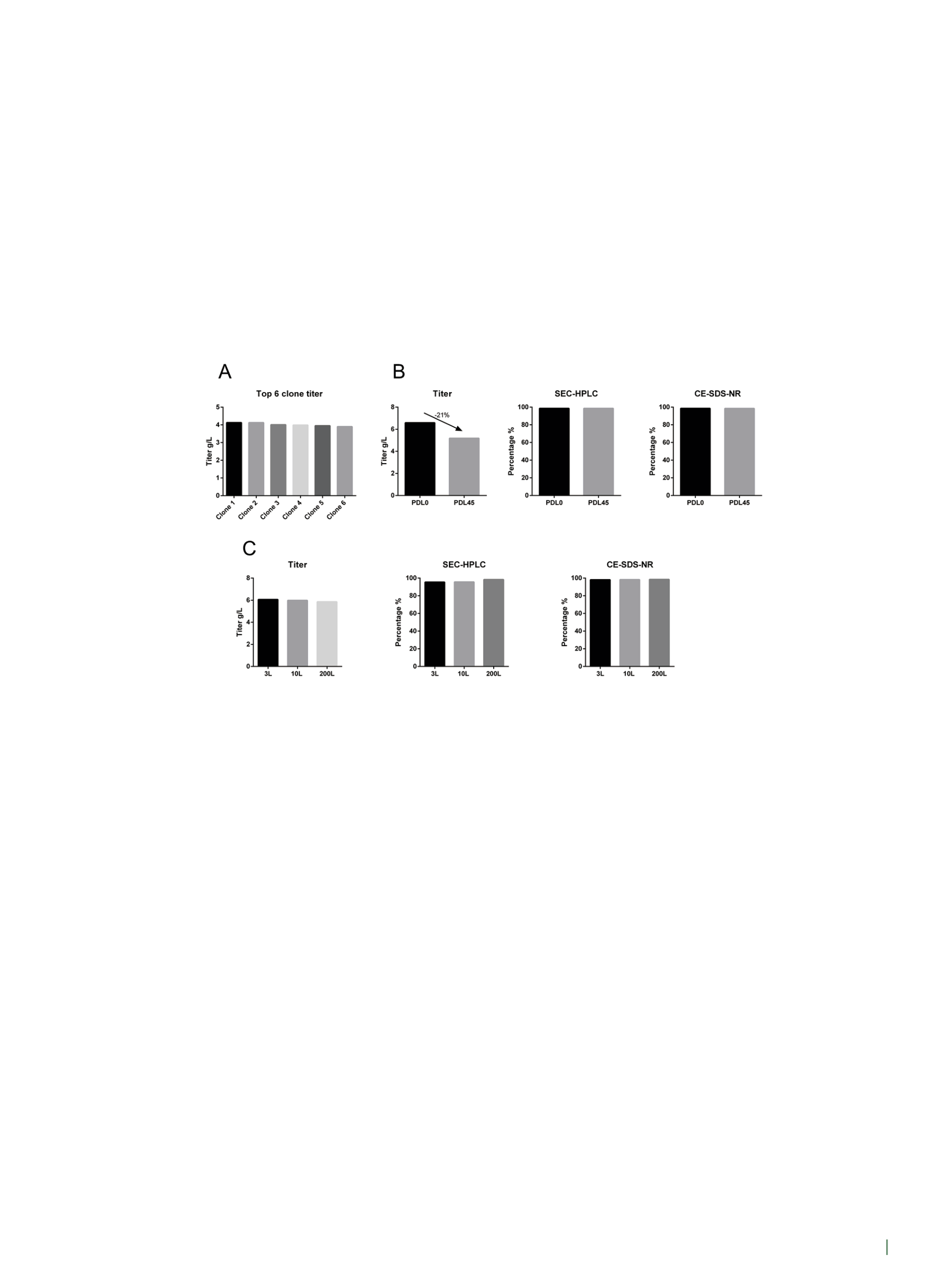
clones were evaluated in fed-batch cultures, and the top 6 clones exhibited a similar titer of around 4 g/L (Figure 5A).
NGS verified that all 6 clones contained the desired expression cassette for production of the bsAb. The master cell bank
(MCB) was derived from the best clone and the stability of MCB was further assessed. After 45 cell doublings, neither
3 Optimized Cell Line Development Strategies for Bispecific Antibody Manufacturing
the target gene nor the nearby functional regions showed undesired variations. Additionally, there was no significant
decline in gene copy number of both chains, suggesting the genetic stability of this clone. The titer decreased by 21%
after 45 generations, indicating a favorable titer stability that meets the requirements for large-scale manufacturing.
As revealed by SEC-HPLC and CE-SDS-NR analyses, comparable purity was achieved by the MCB cells and the
cells after 45 generations (Figure 5B).
After optimizing the upstream process development, the titer of this bsAb increased to 6 g/L. The high titer was
consistent during the scale-up process. Importantly, the purity of this bsAb, as assessed by SEC-HPLC and CE-SDS-NR
analysis, remained consistent and comparable throughout the scale-up process from 3L to 10L and the 200L tox
batch (Figure 5C). This demonstrates the robustness and stability of the manufacturing process, ensuring that
the product maintains its quality attributes across various production scales.
Figure 5. A) The titer of top 6 clone. B) Assessment of MCB stability.
C) BsAb production through a robust and stable scale-up process.
Conclusion
Cell line development is an early and crucial step in the manufacturing of biopharmaceuticals and other biological
products. The selection of an optimal cell line directly influences the product titer, quality, and scalability. In ProBio’s
well-established cell line development platform, we have showed that construction of bsAbs with high yield and purity
can be achieved through an optimized two-vector system.
By carefully adjusting the expression of selected polypeptide chains, we achieve the highest cases of correct assembly
at an early stage leading to stable and robust cell line development for the production of bispecific antibodies. An ideal
clone with high titer, quality, and stability can facilitate the seamless connection between cell line development
and upstream process development, ensuring a smooth transition from small to large-scale production with the
final product meeting the expected quality and titer standards.
In summary, a robust and stable cell line with minimized batch-to-batch variability guarantees the consistency
and reproducibility of the bioproduction process which is essential for meeting regulatory requirements and producing
biotherapeutics with predictable quality attributes. Well-tested cell line development not only accelerates the overall
biomanufacturing process, reducing time-to-market for new therapies but also contributes to cost savings, making
biopharmaceuticals more accessible and affordable.
ProBioCDMO.com
4

ProBio Inc.
Building 9, 311 Pennington Rocky Hill Rd,
Pennington, NJ
ProBioCDMO.com
+1-732-885-9188 (US)